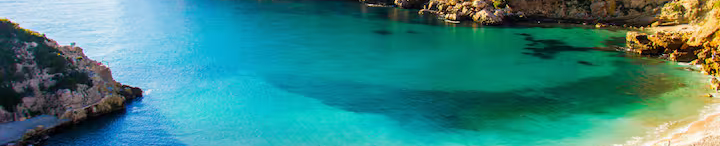
From this viewpoint you can see a large canal cut and dug on the toscar, which in Roman times was used to let in seawater, forming an area of salt flats known as the Saladar. Over the centuries, and in the Middle Ages, the noria was incorporated, a mechanism with a large vertical wooden wheel that was moved by an animal. The Séquia de la Nòria is located in the area known as Segundo Montañar or Montañar II. It forms the coastline of Xàbia before reaching the Cala Blanca o Caleta. From this emblematic place you can see the sea, Cabo San Antonio and Cap Sant Martí or also known as Cap Prim. The uniqueness of this area of Xàbia and characteristic is the rough stone found. An easy carving stone that has been used for construction, since most of the arches of the houses in front and the type of stone and hence the well-known ‘Tosca de Xàbia’.